Introduction
For many UK businesses, a website is often treated like a digital brochure — something that simply explains what the company does.
But in reality, a well-designed website should do far more than that.
It should actively generate leads.
Lead generation is one of the most important elements of digital growth for modern businesses. Whether you’re a startup founder, a service-based company, or a growing SME, your website should work as a 24/7 lead generation engine that consistently attracts and converts potential customers.
Yet many businesses struggle with this.
They may have traffic coming to their website, but very few enquiries, bookings, or form submissions.
The reason? Their website was never designed with lead generation in mind.
In this guide, we’ll explore how lead generation works, the strategies that actually drive results, and how businesses can turn website visitors into high-quality leads.
What is Lead Generation?
Lead generation is the process of attracting potential customers and converting them into people who express interest in your business.
This interest is typically captured through actions such as:
- Filling out a contact form
- Booking a consultation
- Downloading a resource
- Requesting a quote
- Signing up for a newsletter
A lead is simply someone who has shown interest in your services and shared their contact information.
For UK businesses, effective lead generation often happens through a combination of:
- Search engine traffic (SEO)
- Paid advertising
- Content marketing
- Landing pages
- Optimised websites
But here’s the key point:
Traffic alone doesn’t generate leads. Conversion does.
A website may attract hundreds or even thousands of visitors each month. But if those visitors are not guided towards a clear action, most of them will simply leave.
That’s why modern websites need to be built with conversion-focused design and clear lead capture systems.
The Key Components of a Successful Lead Generation Strategy
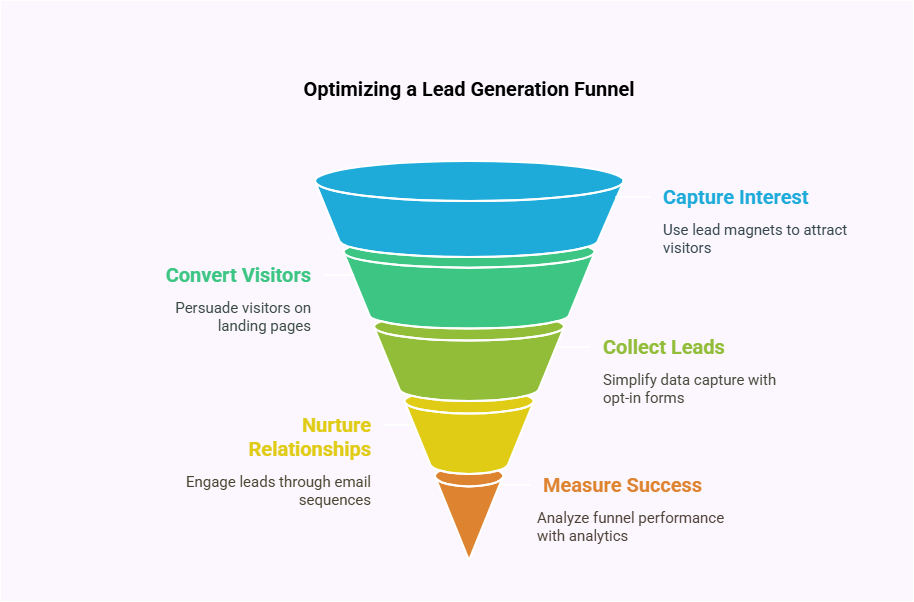
Lead generation isn’t about a single tactic. It’s about creating a complete system that turns interest into enquiries.
Here are the core components that make lead generation effective.
1. Targeted Website Traffic
Before leads can be generated, the right people must first find your website.
Common traffic sources include:
- Google search (SEO)
- Google Ads
- Social media
- Referral traffic
- Email marketing
For most service-based UK businesses, SEO and search intent are particularly powerful.
When someone searches for terms like:
- “web design agency in London”
- “accountant for small businesses UK”
- “digital marketing services near me”
They are already actively looking for help.
This makes them far more likely to convert.
2. Clear Value Proposition
When visitors arrive on your website, they should immediately understand:
- What you do
- Who you help
- Why they should choose you
If this message isn’t clear within the first few seconds, visitors will leave.
Strong value propositions often include:
- Clear headlines
- Simple explanations
- Proof of expertise
- Visible results or benefits
3. Conversion Opportunities
A visitor should never have to search for how to contact you.
Your website should offer clear opportunities such as:
- Contact forms
- Call-to-action buttons
- Quote request forms
- Booking systems
- Lead magnets
The easier it is to take the next step, the more leads you will generate.

Practical Lead Generation Strategies That Work
While every business is different, some lead generation strategies consistently perform well for service-based companies.
Here are some of the most effective ones.
1. High-Converting Landing Pages
Landing pages are designed specifically to convert visitors into leads.
Unlike standard website pages, they focus on one clear action, such as:
- Requesting a consultation
- Downloading a guide
- Booking a demo
Effective landing pages include:
- Strong headlines
- Clear benefits
- Social proof
- Simple forms
- Strong call-to-action buttons
2. Lead Magnets
A lead magnet is something valuable offered in exchange for contact information.
Examples include:
- Free guides
- Industry checklists
- Strategy templates
- Free audits
- Mini consultations
For example:
A digital agency might offer a free website conversion audit to attract business owners interested in improving their site.
3. Strategic Call-to-Actions
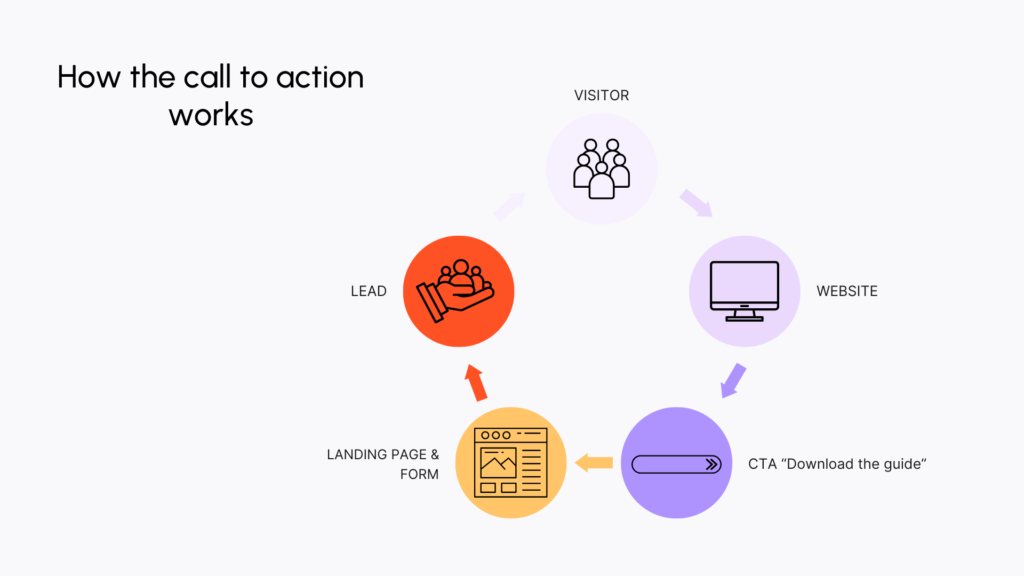
Calls-to-action (CTAs) guide visitors towards becoming leads.
Examples include:
- “Book Your Free Consultation”
- “Get a Custom Quote”
- “Start Your Project”
- “Download the Guide”
The placement of these CTAs across your website is crucial.
They should appear:
- Above the fold
- Within content
- At the end of sections
- On landing pages
- In the navigation menu
Common Lead Generation Mistakes Businesses Make
Many businesses invest in a website but overlook the elements that actually generate leads.
Here are some common mistakes.
1. Treating the Website Like a Brochure
Many websites simply explain services but never guide visitors toward an action.
A lead-generating website should actively direct users to take the next step.
2. Weak or Hidden Calls-to-Action
If your CTA is difficult to find, visitors will leave without contacting you.
Every important page should include a clear and visible CTA.
3. Too Much Information
Overly complicated pages can overwhelm visitors.
The goal of a lead generation page is clarity and simplicity, not information overload.
4. Slow or Poorly Designed Websites
Speed and user experience play a huge role in conversion rates.
If your website is:
- Slow
- Difficult to navigate
- Not mobile friendly
Visitors will leave before becoming leads.
How UK Businesses Can Build a Lead Generation System
Lead generation works best when businesses approach it as a complete growth system, rather than a single tactic.
Here’s a simple framework businesses can follow.
Step 1: Attract the Right Traffic
Focus on SEO, content marketing, and paid ads that target people actively searching for your services.
Step 2: Deliver a Strong First Impression
Your website must immediately communicate value and professionalism.
Step 3: Guide Visitors Toward Action
Use clear CTAs, forms, and booking options to make it easy to enquire.
Step 4: Capture and Manage Leads
Use CRM systems, email follow-ups, or automated responses to manage incoming leads efficiently.
Step 5: Optimise and Improve
Lead generation is not static. Businesses should continuously test:
- CTA placement
- Page design
- Landing pages
- Form length
- Messaging
Even small improvements in conversion rate can significantly increase leads.
WebGT Insight: Why Conversion-Focused Websites Matter
At the heart of successful lead generation is a well-designed website.
Many businesses invest heavily in marketing but overlook the platform where conversions actually happen — their website.
A professionally designed website should:
- Guide visitors through a clear journey
- Highlight the business’s unique value
- Build trust through design and messaging
- Make it easy for visitors to take action
At WebGT, we specialise in building high-converting websites and lead generation systems designed specifically for growing businesses.
Our approach focuses on one core principle:
Websites That Turn Visitors Into Leads.
Instead of simply creating visually appealing websites, we design platforms that combine:
- Strategic UX design
- Conversion-focused layouts
- Clear calls-to-action
- Performance optimisation
The result is a website that doesn’t just look professional — it actively helps businesses generate new enquiries and opportunities.
Conclusion
Lead generation is essential for businesses that want consistent growth.
A website should never be a passive online presence. Instead, it should work as a powerful lead generation tool that attracts visitors and converts them into potential customers.
The most successful businesses focus on:
- Attracting the right traffic
- Communicating clear value
- Guiding visitors toward action
- Optimising for conversions
When these elements work together, a website becomes far more than just a marketing asset — it becomes a core driver of business growth.
Call To Action
If your website is attracting visitors but not generating enough enquiries, it may be time for a more conversion-focused approach.
At WebGT, we build high-performing websites designed to generate real business leads.
If you’re ready to turn your website into a powerful lead generation system, our team can help you create a platform that converts visitors into opportunities.
Start building a website that works for your business — not just one that looks good.
